
I was sitting at my drafting table last Tuesday, surrounded by half-finished urban sketches and a miniature scale model of a Bauhaus loft, when I realized my own finances felt as cluttered as a construction site before the blueprints are finalized. Most “experts” will tell you that learning how to create a monthly budget requires a soul-crushing spreadsheet and a diet of nothing but instant noodles to save a few pennies. They treat money like a math problem to be solved, rather than a design tool to be mastered. Honestly? That rigid, restrictive approach is exactly what kills the joy of living.
I’m not here to hand you a lecture on deprivation or a complex system that feels like a second job. Instead, I want to show you how to treat your finances like an urban plan: a strategic framework that provides the structure necessary for creativity to flourish. I’m going to share my personal, no-nonsense method for building a budget that actually accounts for your passions—whether that’s vintage furniture hunting or a spontaneous weekend getaway. We aren’t just counting pennies; we are designing a lifestyle that supports the person you are becoming.
Mastering Budgeting Methods for Beginners With Artistic Precision

As you begin to sketch out these financial boundaries, don’t feel like you have to build your entire system from scratch in a vacuum. I’ve found that sometimes the best way to find your rhythm is to look at how others are successfully navigating the intersection of intentional living and smart money management. If you’re looking for some real-world inspiration on how to balance a vibrant, curated lifestyle without overextending your resources, I always find myself gravitating toward the practical, relatable insights over at Casualtoronto. It’s a wonderful way to see how mindful spending can actually fuel your creativity rather than stifling it, helping you ensure your budget feels less like a cage and more like a well-designed floor plan for your future.
When you first start managing personal finances, it can feel a bit like standing before a massive, blank canvas without knowing which brush to pick up first. You don’t want to just scribble numbers down; you want a system that feels intentional. One of my favorite starting points is the 50/30/20 rule explained as a way to balance your life’s essentials with your creative whims. You allocate 50% of your income to needs, 30% to wants—those little joys like a new vintage lamp or a weekend sketching trip—and 20% to savings. It’s a beautifully simple framework that prevents your lifestyle from feeling restrictive while ensuring your future remains structurally sound.
If you prefer a more granular approach, you might fall in love with the zero-based budgeting technique. Think of this as the ultimate urban planning project: every single dollar is assigned a specific “zone” or purpose before the month even begins. By tracking monthly expenses with this level of detail, you ensure that no cent is left wandering aimlessly through your accounts. It turns your finances from a chaotic sprawl into a well-designed, highly functional neighborhood where every resource has a meaningful home.
Tracking Monthly Expenses to Map Your Lifestyles Flow
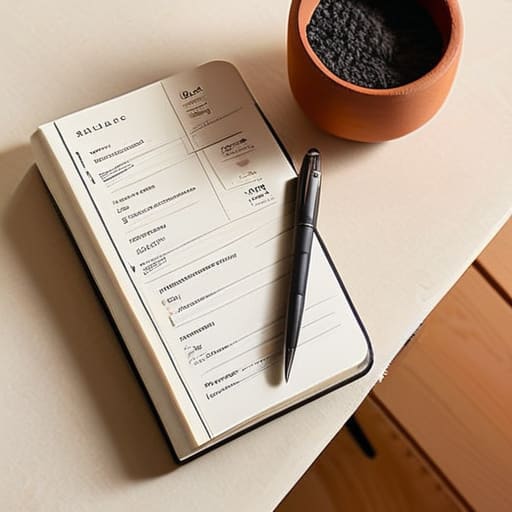
If designing a room requires understanding the dimensions of a space, then managing your lifestyle requires a clear view of where your resources actually go. I like to think of tracking monthly expenses as sketching the floor plan of your financial life; you can’t renovate or expand until you know exactly where the load-bearing walls are. Without this visibility, you’re essentially trying to decorate a house in the dark. Whether you’re using a sleek app or a hand-drawn ledger that mirrors my urban sketching journals, the goal is to capture the rhythm of your spending—the steady hum of your rent and the sudden, vibrant bursts of a weekend gallery visit.
Once you’ve mapped out these flows, you can start applying more intentional frameworks. For instance, if you’re feeling overwhelmed, the 50/30/20 rule explained simply as a way to balance your needs, wants, and future goals can act as a stabilizing scaffolding for your finances. It prevents you from over-investing in the “decor” of your life while neglecting the essential “foundation” of your savings. By observing these patterns, you aren’t just watching numbers move; you are learning the unique architecture of your own habits.
The Architect's Toolkit: 5 Design Principles for Your Financial Blueprint
- Treat your fixed costs like the load-bearing walls of a house; they are the non-negotiable structures—rent, utilities, insurance—that provide the essential stability your entire lifestyle rests upon.
- Allocate a “Creative Contingency” fund, much like a buffer in an urban development project, to account for those unexpected life moments that require a bit of spontaneous aesthetic or practical adjustment.
- Use the “Zoning Method” to categorize your discretionary spending, separating your essential living zones from your high-energy “lifestyle districts” like dining out or travel, so you can see exactly where your resources are flowing.
- Implement a visual tracking system that feels less like a chore and more like an urban sketch; whether it’s a color-coded app or a beautiful linen journal, the process should inspire you to engage with your data rather than dread it.
- Conduct a quarterly “Space Renovation” for your budget, reviewing your spending patterns to see if your financial allocations still reflect the person you are becoming and the lifestyle you are actively curating.
Designing Your Financial Future

As we wrap up this deep dive, remember that budgeting isn’t about restriction; it’s about intentionality. We’ve explored how to select a method that suits your unique rhythm, how to map out your expenses like a city planner mapping a new district, and how to ensure every dollar has a purpose. By treating your finances with the same care you’d give to a meticulously curated gallery space, you move from being a passive observer of your spending to the active architect of your lifestyle. You now have the blueprints—the methods, the tracking systems, and the clarity—to ensure your financial foundation is as sturdy and well-planned as a masterfully designed urban plaza.
Ultimately, I want you to look at your budget not as a list of “no’s,” but as a map of possibilities. Just like when I’m out urban sketching and seeing a blank corner of a street transform into a vibrant community hub, a well-managed budget allows you to see the hidden potential in your own life. It provides the freedom to invest in that vintage mid-century sideboard you’ve been eyeing or to save for that dream renovation that will turn your house into a true sanctuary. Stop viewing your money as a source of stress and start seeing it as the canvas for your creativity. Go ahead, pick up your pen, and start sketching the life you want to live.